

Bones and All: The Midwest and the Horror of the Mundane

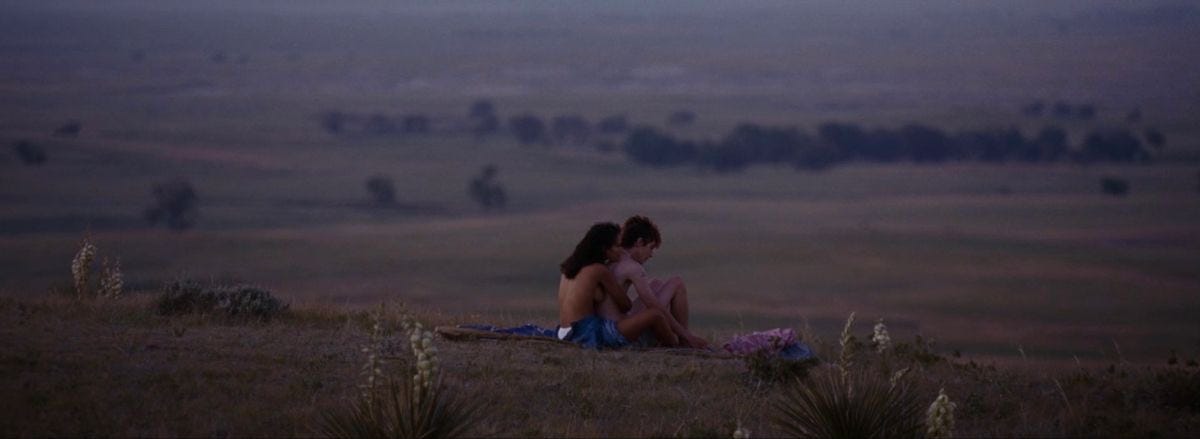
Luca Guadagnino’s acclaimed gothic horror film, Bones and All explores the landscape of the desolate midwest as a conduit for ostracism and inner turmoil. The film is set in the late 1980s— a world in which the monotony of small town isolation is far from easy to be quell. Bones and All’s central character is a teenage girl by the name of Maren—tenderly portrayed by Taylor Russell—. Her father has maintained a lifestyle of temporary homes, feigned normalcy, and isolation for himself and Maren. The cause for this lifestyle is revealed fairly early on in the film— Maren has seemingly inexplicable, often uncontrollable cannibalistic urges. When a sleepover with classmates goes horribly awry, her father abandons her thus leaving her with the bare necessities for survival and a series of confessional tapes he has recorded for her. Maren ultimately opts to traverse the dull, seemingly unthreatening Midwest in search of her mother whom she knows very little of.
While Maren’s search for her mother and an explanation for her affliction is a primary focus of Bones and All, it ultimately sets the scene for a frenzied coming-of-age romance unlike most other films. Maren encounters an array of characters, including several eccentric fellow cannibals. Maren is quick to understand that cannibalism doesn’t make someone a monster in her world; there are those that choose to embrace it violently, while others seek to tame it in favor of a life of semi-normalcy. Maren eventually stumbles upon a boy named Lee after he has brutally killed and eaten an unfriendly trucker that he’s met. The pair quickly bond and embark across state lines together— love devouring them quickly and unabashedly.
However, love is not sustainable when handed to those who will never believe they are allowed to possess it. Chaos predictably ensues and culminates in a tragedy that cements what Maren had not allowed herself to believe; she is no monster, and the extent of her love is proof of that. While there are many tales of cannibals, vampires, and all sorts of shadowy beasts who consume humans for one reason or another, it is rare to be presented with a character who seeks to wholly obtain a genuine sense of self that also aligns with their societal backdrop.
Hannibal Lecter’s penchant for dissection or Dracula’s long-lived immoral affliction are amongst many culturally significant examples of human consumption as a horror trope. Many of these stories feature men as the fearful creatures lurking about for their next gustatory indulgence, but there are both centuries old and modern tales of women who are assigned this role. Julia Ducournau’s 2016 festival hit Raw, Sheridan Le Fanu’s 1827 gothic romance novel Carmilla, and Ana Lily Amirpour’s A Girl Walks Home Alone at Night are only a few examples of women with cannibalistic urges that are biologically innate or obtained. The women in these stories are ultimately undone by their inability to control their urges, or lessen the ferocity of them.
Cannibalism and body horror function as mechanisms of romanticism— the body contorts and offers itself for an insatiable desire, and we are all but helpless— a tangible hunger for others serves as the apex of such desire in Bones and All, and it’s executed as tastefully as can be done. The subject matter is only complemented by earnest performances from Taylor Russell and Timothée Chalamet, carefully contrasted by the sinister behavior of their fellow cannibals. The terror of a vast, vacant landscape with little escape or possibility often serves as a tool within horror to communicate the solitude of being the monstrous disguised as the mundane.
Isolation—of course— accompanies the dismal surroundings of malefic horror antagonists, or doomed victims of their circumstances more often than not. It serves as a fabled parallel to the loss of identity, companionship, and belonging that plagues those befallen with a differing identity or appearance. There is an innate victimhood in existing as the only thing within 100 miles disallowed to roam freely. While the North American south has its own legacy within horror, southern gothic stories typically feature the beauty found in the environments of the south. From Michigan to Illinois —Halloween for example—, the land of the midwest often serves as either nothing more than a backdrop, or a feature of the horror itself. The midwest is also sometimes presented as a sepia-tinted dead zone lacking beauty or softness, which is far from the reality of such an environmentally versatile region.
The intimately sorrowful landscapes are sometimes juxtaposed by the imagery of other regions, particularly when said regions serve as an antithesis to the central characters’ origin. In Bones & All, Maren’s surroundings do not drastically shift to places of great beauty though they do somewhat vary in size of populace, state of local architecture, and perceived extent of ideal American normalcy. The moments that lend hope to Maren are undercut by revelations more cruel and unfamiliar than expected. A small-town carnival serves as the backdrop to Maren and Lee’s terse run-in with a gang of cannibals who relish in not only the act of consuming, but the act of killing in order to survive; it is a form of blood sport undisguised as anything more upstanding. It is then that Maren, as well as the more experienced Lee are informed that there are others like them that choose to Eat— fully autonomous cannibals who have chosen a lifestyle that has plagued others. This is ultimately merely a precursor to further devastating confrontations for the pair.
In a more hopeful tale, perhaps the environments would increase in scale or the color grading would morph into candy-coated shades that fail to succinctly reflect the happiness granted to Maren and Lee. Perhaps, the monstrous girl and the monstrous boy would have more than an illusion of a world more bright and welcoming— a midwestern dream all their own.
I came across your publication not too long before I watched the film myself and it's now become one of my favorites! This was a very lovely and wistful read. <3