

PIXEL PERFECT: DIGITIZATION, APPROPRIATION, POLITIC AND AESTHETIC IN THE WHITE BEAUTY INDUSTRY
(nothing revolutionary here, just some thoughts)

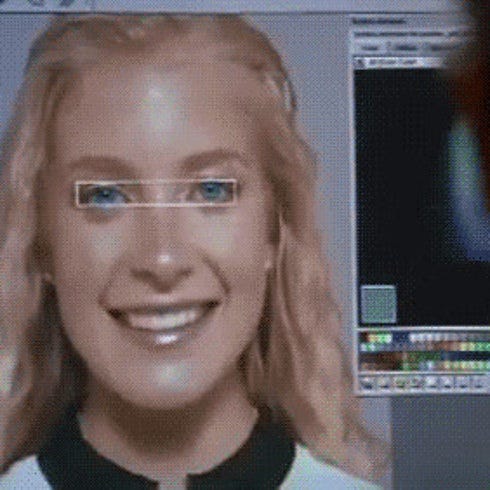
Image: Still from the Disney film Pixel Perfect (2004)
In recent years, social media aficionados have seemingly found the secret formula to “otherworldly” and “perfect” beauty. The concept of conventional beauty has been warped so extensively that it’s indistinguishable from physically tangible forms of beauty that are possible to achieve. Face and body editing via filters, and editing apps such as facetune or remini have, for many people (often women and other misogyny affected people), instilled within an unattainable standard that they must surpass. Even instances of 3D modeling figures gaining traction on social media (refer to Instagram user, and influencer, LilMiquela) are proving to be increasingly disturbing, not solely due to the false personality attached but also because of the general public’s initial inability to distinguish these artistic figures from actual humans.
There’s always been a desire instilled within misogyny affected people, to be beautiful in a way that others can not be, not necessarily in the sense of gender transcendence and gender euphoria as many of those fallen prey to these standards are cisgender women, but in the sense of standing apart for the gain of social capital. The end goal, however, has never been mere internet fame for most people; the ultimate goal is for internet fame to translate to tangible opportunities, physical alteration, wealth, and some semblance of offline recognition.
Beauty is capital. That’s the gist of beauty politics and survival in a superficial, racist, colorist, fatphobic, and ableist society. While this won’t serve as a revelation for most, it is important that everyone fully understands the full scope of this at some point in our lives. Being deemed too fat, dark, “ugly” etc. is often a one-way ticket to interpersonal and systemic violence and inequality. Women, and those perceived and socialized as such, who are deemed undesirable are granted less opportunities in workplaces, are paid less, and face disproportionate violence at the hands of coworkers and higher ups. There is also the matter of domestic violence and forms of microaggressive mistreatment in interpersonal relationships. It’s to be noted that microaggressions are only minuscule and unnoticeable to those utilizing them.
All of this isn’t to say that it’s wholly impossible to have a healthy relationship with the digitization of desirability. However, the exaggerated ‘blurred skin texture, nearly imperceptible nose, and dramatically altered eyes (refer to the “fox eye” trend which has been called sinophobic by some East Asian people)’ look that has been utilized by white women, is something that exists at the expense of others, some of who naturally possess certain features that others are adopting in a way that is quite frankly, often racist and fetishistic.
Those who “poorly” attempt to adhere to this new set of digital standards, are scrutinized for their inability to successfully fool the masses. Ultimately, that’s what everyone is looking for, right?: an illusion. Even women who are famous outside of the realm of social media have failed to be this perceived “perfect woman”. There’s a seemingly thin line between appearing perfect online and in photos and altering one’s appearance with cosmetic surgery to obtain perfection; those who aren’t famous who are victims of “botched” results are often negatively judged for their desperation to gain a leg up in the world, with little empathy offered to them.
This phenomenon raises a few concerning questions: when is any of this too much for onlookers? When do we gain compassion for those of color who alter their bodies to fit the beauty standard, and not to simply poorly imitate the appearances of other various women of color?: Black women who have been oppressed for having larger lips, bigger noses, and darker skin than counterparts, or say, East Asian women who have been taunted for their eye shapes etc. Beauty is a game, a farce. It’s built on notions that view certain demographics as lesser, solely because of the features possessed by these demographics. Being viewed as desirable isn’t the end all, be all of life. Sure, it determines the treatment of individuals, but what could happen if we finally said no? What could happen if we put beauty down?